
Showing posts with label Artificial Intelligence. Show all posts

Friday, February 1, 2019

IDC Philippines Reveals TOP ICT Predictions for 2019 and Beyond.

IDC Predicts for 2019 and beyond by 2020, at east 30% of organizations and companies will push for "digital determination" by re-imagining the future through innovative business models and digitally enabled products and services transformation their respective markets, operations and businesses.
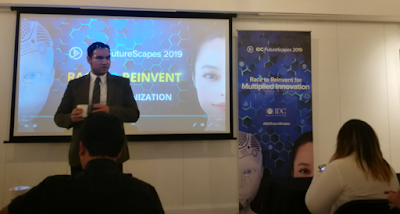

"To be digitally determined, Philippine organizations require more than just resilience; they need a 'blueprint' that consists of a unified enterprise strategy, a long investment plan based on the principle that digital is inherently valuable to the business, and a single digital platform to scale technology innovations," said Sudev Bangah, Managing Director for IDC ASEAN. "But aside from these technical aspects, digital determination involves having the will to make the required organizational and cultural changes to better adapt in today’s digital transformation age," he added.


Bangah added, "New technologies are changing paradigms for individuals, businesses, industries, economies, and governments. The race to the future enterprise has begun. And with digital disruption becoming the new normal, no one and no entity will be spared of the need to at least reset or reboot themselves, if not reinvent."IDC puts together 10 Key Trends Opportunities and Challenges for IT Managers for 2019 and Beyond.

IDC puts together 10 Key Trends Opportunities and Challenges for IT Managers for 2019 and Beyond:

#1: Digital determination. By 2020, at least 30% of organizations will be digitally determined, transforming markets and reimagining the future through new business models and digitally enabled products and services.


#2: Digital trust. By 2020, 40% of CIOs will initiate a digital trust framework that goes beyond preventing cyberattacks and enables organizations to resiliently rebound from adverse situations, events, and effects.


#3: Digital KPIs. By 2023, 55% of entities will have incorporated new digital KPI sets – focusing on product/service innovation rates, data capitalization, and employee experience – to navigate the digital economy.


#4: Data monetization. By 2021, 40% of large enterprises will create data management or
monetization capabilities, thus enhancing enterprise functions, strengthening competitiveness, and creating new sources of revenue.


#5: BizOps. By 2021, 45% of CIOs will expand agile/DevOps practices into the wider business to achieve the velocity necessary for innovation, execution, and change.


#6: Digital twin. By 2023, 30% of the Philippines' top 1,000 companies will have implemented advanced digital twins of their operational processes, which will enable flatter organizations and onethird-fewer knowledge workers.


#7: AI-driven edge. By 2023, over 30% of organizations' cloud deployments will include edge computing, and 15% of endpoint devices and systems will execute AI algorithms.

#8: Blockchain-enabled DX platforms. By 2023, prominent in-industry value chains, enabled by blockchains, will have extended their digital platforms to their entire omni-experience ecosystems, thus reducing transaction costs by at least 30%.


#9: AI is the new UI. By 2024, AI-enabled user interfaces and process automation will replace onethird of today's screen-based applications. By 2022, 30% of enterprises will use conversational speech technology for customer engagement.


#10: AI governance. By 2022, 30% of enterprises will task CIOs to transform and modernize governance policies to seize the opportunities and confront new risks posed by AI, machine learning, and data privacy and ethics.


Read More »

Tuesday, October 23, 2018

Hikvision Bring Smarter Security with Artificial Intelligence

Hangzhou Hikvision Digital Technology Co., Ltd. (Hikvision), the world’s leading provider of innovative security products and solutions, recently embarked on an AI Tour across 40 countries spanning Asia, Africa, Middle East, Oceania, and Latin America. In the tour’s stop in the Philippines, Hikvision showcased AI innovations covering AI Cloud architecture, AI technologies, AI products, and other vertical solutions.


In today’s digital age, Artificial intelligence (AI) has begun to revolutionize how we live, work and play. AI is offering businesses the prospect of increased productivity and innovation, while at the same time also enabling society to help solve some of its most persistent challenges -- like disease, natural disasters, and security.

Ray Wu, General Manager of Hikvision

“As AI becomes more common and more powerful, deep learning will soon become the foundational technology for the security industry. AI will strengthen critical security efforts in every sphere, with new machine learning techniques giving CCTV cameras the ability to spot troubling behavior without human supervision,” said Ray Wu, General Manager of Hikvision. 

Deep learning is the next level of AI development. It is beyond machine learning where supervised classification of features and patterns are set into algorithms. Rather, deep learning incorporates unsupervised or “self-learning” principles. “Hikvision is building deep learning into its own analytics algorithms. The result of multi-layer learning and extensive data collection is enhanced accuracy and improved analytics. And this applies to vehicle and human recognition,“ explained Mr. Wu.


Based in Hangzhou, China, Hikvision is a pioneer in intelligent video surveillance and has created diversified products and solutions that utilize AI to address today’s modern challenges. In Hikvision’s AI tour, the company introduced several product models equipped with deep learning algorithms:


  • EXIR Flexible PanoVu Network Camera - This camera features 1/2.7" progressive scan CMOS sensors and four lenses with each lens supporting 1080p resolution at 30fps. A compression of up to H.265+ saves bandwidth and storage space. The EXIR is capable of 6 behavior analyses as well as 4 exception detections.
  • PanoVu PT Series 2MP + 2MP Target Capture Camera - This camera is able to capture distant images as well as close-up images with the integration design of distant view camera and tracking PTZ camera. This series can be widely used in situations where wide monitoring range and high definition are required, such as the entrance or exit of an airport, park, or station. 
  • 2MP 25× IR Network Speed Dome - The speed dome is a DarkfighterX series camera that adopts the patented dual-sensor design to process color and brightness independently, and outputs one full-color image. It is equipped with deep-learning-based target classification algorithms for auto-tracking and perimeter protection.
  • Facial Recognition Server - Powered by deep learning technology, the server incorporates algorithms for identity confirmation and support for up to 1 million blacklisted targets. It is compatible with third-party cameras and meets varied scenario requirements, including shopping malls and public squares.
  • LPR Camera - Powered by Hikvision’s deep learning AI algorithm, this camera can identify more than 6 types of Philippine license plate numbers, including both private and public utility vehicles, at 90% accuracy. Hikvision is dedicated to optimizing its LPR algorithm and expects to up its accuracy to 95% by 2019.


Hikvision has introduced a series of products that can accurately detect, recognize, and analyze human, vehicle, and object features and behavior, and can be widely used in indoor and outdoor scenarios. “With AI, CCTV cameras now have the digital brains to match their eyes, letting them analyze live video with no humans necessary. AI is a game-changer, and we’re seeing firsthand how that technology can be used to guard against theft and improve security,” said Evelyn Ativo, Product Group Head of Iontech Inc., one of the key players in the Information Technology distribution industry in the Philippines.
Read More »

Thursday, October 4, 2018

Hikvision AI Tour 2018 Next Stop Philippines

Hikvision, world’s leading provider of innovative security products and solutions based in Hangzhou, China, embarks on an AI Tour across 40 countries spanning Asia, Africa, Middle East, Oceania, and Latin America until November this year. The company is set its AI Tour in the Philippines.

Empowered by AI and years of expertise, Hikvision is now a pioneer in intelligent video surveillance. Has diversified products and solutions that utilizing AI to address today’s modern challenges:


  • Intelligent Traffic System – Hikvision Intelligent Traffic Solution helps reduce impact from events and incidents on heavily trafficked roads and motor ways.
  • Smart Retail – Hikvision Smart Retail Solution packs video surveillance, business intelligence and parking area data into complete end-to-end solutions for various shopping areas.


“Shaping Intelligence: Hikvision AI Tour 2018 Philippines”, the tour next stop is the Philippines happening this October 18 at the Marco Polo in Ortigas, Manila. It will showcase Artificial Intelligence innovations covering AI Cloud architecture, AI technologies, AI products, and other vertical solutions, especially for Intelligent Traffic Systems.

Iontech Inc., one of the key players in the Information Technology distribution industry in the country, has partnered with Hikvision to bring the AI tour to the Philippines. “As we promote reliable computer systems and communication devices in the Philippines, we continue to look at revolutionary technologies like AI. AI is changing the world, and its enabling businesses all over the world address modern problems in an intelligent and efficient way. We’re very excited to partner with Hikvision to showcase the power of AI,” said Iontech’s Product Group Head, Evelyn Ativo.


See how AI technology is transforming video surveillance at the Philippine leg of the Hikvision AI Tour. Visit https://www.facebook.com/HikvisionPhilippines/ for more details.

Interesting innovations here especially Intelligent Traffic System. Hopefully our Government and line agencies will take note as these new innovation may solve our traffic problem in the Metro and key cities in the country.

Read More »

Wednesday, August 22, 2018

Asus ZenFone 5 and ZenFone 5Z, Smartphones that Thinks for You!

Artificial Intelligence (AI) is now being embraced by the world today for automating practically anything in various fields and environment for making life easier. It is also now being utilize on our smartphone especially with Zenfone 5 and Zenfone 5Z!


The ZenFone 5 and ZenFone 5Z has been widely celebrated for their AI Camera features resulting to a high DxOMark score of 90 points making the two exceptional camera-centric smartphones. So what exactly makes these smartphones smarter than usual?

Here are five things that the ZenFone 5 and ZenFone 5Z have already thought about way before you:

A CAMERA THAT NOT ONLY THINKS FOR YOU, BUT ALSO LEARNS FROM YOU
Your smartphone is your everyday driver when capturing everyday moments: the friends you’re with, the food you eat, and the places you go to. That is why ZenFone 5 and ZenFone 5Z both employ 12MP Sony IMX 363 Rear camera, which produces stunning outputs every time for an amazing photography experience. While it’s important to have a great camera system, the ZenFone 5 and ZenFone 5Z’s PixelMaster camera takes it a whole lot further.


AI and Machine Learning is built in to the ZenFone 5 and 5Z. You can simply point your ZenFone’s camera into any subject and it will automatically recognize what you’re shooting. Based on 16 Types of Scene Detection, the ZenFone 5 and ZenFone 5Z will automatically apply the necessary settings to get the perfect shot. The gallery is also smart as it sorts your photos based on what scene was detected, as well as identify the people in the photo, less hassle on your part.


Of course, everyone has their own style when it comes to photography, and the ZenFone 5 and ZenFone 5Z can actually learn from your preferences using AI Photo Learning. With this, your ZenFone can present you with two versions of a photo that you shot, making you choose which version you want best. Depending on your choice, your ZenFone will automatically apply those settings on future photos.

BOOSTED PERFROMANCE, WHENEVER AND WHEREVER


Get the Job done and keep an optimized system everytime... At the push of a button, ASUS’ exclusive AI Boost Technology intelligently determines your apps’ and games’ performance requirements, to ensure that the ZenFone 5 and ZenFone 5Z can keep up with the increasing demand for power.

SMART MULTITASKING, FOR YOUR PRODUCTIVITY


The ZenFone 5 and ZenFone 5Z’s AI capabilities can even help with multitasking. ASUS’ AI-improved OptiFlex technology helps to maximize the performance of your device's Memory, automatically keeping frequently-used apps running in the background so you can always switch between without losing what you are working on.

SECURITY POWERED BY ARTIFICIAL INTELLIGENCE

Security and privacy is a major concern about smartphones nowadays. Thankfully, the ZenFone 5 and ZenFone 5Z add another layer of security with biometrics such as Fingerprint and Face Scanning Technology to keep your smartphone secure.


Face Detection Technology on the ZenFone 5 and 5Z is powered by AI, taking advantage of machine learning to help accurately detect your face in less than 0.1 seconds. You can even use face detection to lock confidential documents, apps, or hidden folders, which makes this a secure and reliable way to secure your data.

ALL DAY BATTERY, EVERYDAY! 
With the ZenFone 5 and ZenFone 5Z, AI boosts your charging speed to ensure that smartphone is always ready for action whenever you need it. Just look for the + icon to see AI Charging at work, and you know that your smartphone will be ready for action again in no time.


When the phone is plugged in at night, AI Charging also helps keep your battery in good shape. By learning your daily wake-up schedule, your ZenFone 5 and ZenFone 5Z ensure that it achieves full charge just before you wake up, avoiding long periods at 100% charge and helping prolong your battery’s lifespan.

MARKET AVAILABILITY
Get ASUS’ most intelligent phone ever, the AI-powered ZenFone 5 and ZenFone 5Z, with cameras that think and learn from you – for only PHP 19,995 and PHP 29,995, respectively.


Visit the official ASUS Lazada Store and get the best deals about ZenFone and other ASUS products
.
Learn more about this incredibly powerful product by visiting ASUS Philippines’ website, official Facebook, Instagram and Twitter pages and the ZenTalk forum for more updates.

Read More »

Tuesday, June 26, 2018

Microsoft: 5 Areas where AI Is Building A Better, Brighter Future For Asia

Across Asia, a hotly-debated topic amongst business leaders, government policymakers, academics and industry experts is the potential impact that Artificial Intelligence (AI) will have on society.


Understandably, some have a cautious view when it comes to AI development and sometimes painting a grim, dystopic future where large swathes of the population are rendered jobless, access to AI is not evenly distributed amongst citizens as well as privacy and civil liberties are increasingly under threat from AI’s insatiable need for data.

There is no denying that AI will present a new set of societal challenges that will need to be navigated thoughtfully and carefully and, in particular, it will be critical for all organizations to build trust in AI as to their customers and stakeholders.

However, these concerns should not overshadow the enormous potential that AI offers society.

Microsoft list Five key Areas where AI has created remarkable developments and improvements in Asia.

1.Accessibility
Asia-Pacific is currently home to 690 million people with disabilities. AI can help people with vision, hearing, cognitive, learning, and mobility disabilities perform daily tasks more independently, lead a richer, more productive life and participate more fully in society.

Seeing AI app turns the visual world into an audible experience for the low vision community.


For example, Seeing AI is a free app that leverages AI capabilities to identify a broad range of visual cues - including faces, emotions and handwriting. That data is then converted into audio descriptions for the visually-impaired. This enables the 285 million people in the world with low vision to better navigate their day, making the visual world more accessible.

 2.Agriculture
Today, Asia is the world’s most populous region with more than 4.5 billion inhabitants, approximately 60% of the global population, and this number is forecasted to grow to over 5 billion by 2030. This will put incredible strain on the region’s already-challenged food supply chains unless farmers can find new ways to keep up with demand, such as leveraging AI and analytics to greatly improve their yields.

In India, Microsoft has partnered with a non-profit organization, International Crop Research Institute for the Semi-Arid Tropics (ICRISAT), to develop an AI Sowing App that sends advisories to farmers on the optimal date to sow their crops, based on weather conditions, soil, and other indicators.

The solution predicts the optimal sowing period by using AI to analyze 30 years of historic climate data and calculate the adequacy of rainfall and soil moisture using real-time data and weather forecasting models. In addition, the program does not require farmers to incur capital expenditure, such as installing sensors in their fields, making this optimal for emerging markets.

Microsoft and ICRISAT - Bringing Artificial Intelligence to agriculture to boost crop yield


3. Climate Change

One of the most pressing challenges of the 21st century is the Changing Climate, and how it threatens human health, infrastructure, and natural systems. A leading cause of climate change is Carbon Emissions.

Microsoft is embracing the responsibility to operate sustainably and reduce the environmental impact of its business. One of the ways it doe this is by enlisting AI's help to manage the operations and infrastructure of our data centers. As a result, less electricity is needed to fuel data centers’ computing and cooling requirements. In fact, cloud services are 93% more energy efficient and up to 98% more carbon efficient than traditional enterprise data centers.

AI technologies are also being applied beyond the data center to improve the energy efficiency of entire buildings. In Singapore, approximately one-third of the nation’s electricity is consumed by buildings. JTC, a government agency responsible for the developing the nation’s industrial infrastructure, is taking a proactive approach to address this voracious demand for electricity by centralizing its operations on the Microsoft Cloud to monitor, analyze and optimize its buildings. Using sensor data and AI-driven analytics, JTC can now identify and rectify faults before breakdowns occur through a predictive model, resulting in a 15 percent drop in energy cost avoidance.

 JTC is modeling what it means to make buildings more energy-efficient and sustainable


4. Education

Education is one of the building blocks for creating a better future, and AI is being leveraged to enhance the education experience for students and improve outcomes in schools.

With the help of AI, more students can complete their education and graduate as employable new workers who will help grow the future economy.

In Andhra Pradesh, a state in southern India, Microsoft is partnering with the Indian government to launch a new app that predicts which students are most likely to drop out of school. Powered by machine learning, AI capabilities, and the cloud, this solution processes complex data sets that include enrollment information, student performance, gender and socio-economic demographics, school infrastructure, and teacher skills, to look for predictive patterns.


This enables administrators and educators to intervene early and target the most at-risk students with programs and counseling to prevent dropouts. The app is already being used successfully by more than 10,000 schools in Andhra Pradesh, covering more than five million students in 2017.

5. Healthcare

Lastly, AI technology has the potential to assist healthcare providers in their quest to tackle some of the most prevalent diseases we face today, as well as improve the quality of life for Asia’s growing population.

In India, Microsoft is collaborating with one of the largest health organizations in the country, Apollo Hospitals, to develop an AI-focused network aimed at tackling cardiovascular disease, which contributes to nearly one-third of deaths worldwide. In India alone, nearly three million heart attacks happen annually, and it is estimated that 30 million Indians suffer from coronary disease.

By bringing together Microsoft’s AI expertise and Apollo Hospitals’ experience and knowledge in the field of cardiology, this partnership aims to develop new machine learning models to predict patient risk for heart diseases and assists doctors with treatment plans.

Apollo Hospitals India: AI predicts heart diseases

These are just some of the amazing benefits that AI is bringing to society according to Microsoft, though it’s clear that it is still in stage of development. The story of AI is still unfolding, and future chapters will be supported by positive, impactful anecdotes. After all, with AI, we are not just amplifying human ingenuity, but the qualities that make us human: Our caring. Our curiosity. Our collective desire to create a better tomorrow.
Read More »

Friday, June 1, 2018

Philippine Potential Economic Loss at $3.5 Billion Due to Cybersecurity threats - Microsoft

Microsoft commissioned a study to be conducted by Frost & Sullivan regarding “Understanding the Cybersecurity Threat Landscape in Asia Pacific: Securing the Modern Enterprise in a Digital World” that  aims to provide business and IT decision makers with insights on the Economic cost of Cybersecurity Breaches in the region and identify the gaps in organizations’ cybersecurity strategies. The study involved a survey of 1,300 business and IT decision makers ranging from mid-sized organizations (250 to 499 employees) to large-sized organizations (>than 500 employees).

Security experts discuss the economic impact of cybersecurity in the PH during Microsoft’s study launch. From L-R: Hans Bayaborda, Managing Director, Microsoft Philippines; Mary Jo Schrade, Assistant General Counsel, Microsoft Digital Crimes Unit, Microsoft Asia; Angel “Lito” S. Averia, Jr., President, Philippine Computer Emergency Response Team; Atty. Raul Cortez, Corporate, External, and Legal Affairs Lead, Microsoft Philippines.

The  Microsoft and Frost & Sullivan study revealed that the potential economic loss in the Philippines due to cybersecurity incidents can hit a staggering US$3.5 billion which is 1.1 percent of the Philippines’ total GDP of US$305 billion[1]. In addition, more than half of the organizations surveyed in the Philippines have either experienced a cybersecurity incident (18%) or are not sure if they had one as they have not performed proper forensics or data breach assessment (34%).


“As companies embrace the opportunities presented by cloud and mobile computing to connect with customers and optimize operations, they take on new risks,” said Hans Bayaborda, Managing Director, Microsoft Philippines. “With traditional IT boundaries disappearing the adversaries now have many new targets to attack. Companies face the risk of significant financial loss, damage to customer satisfaction and market reputation — as has been made all too clear by recent high-profile breaches.”

The True Cost of Cybersecurity Incidents – Economic, Opportunity and Job Losses

The study also focuses more on economics and employment.

The study finds that a large-sized organization in the Philippines can possibly incur an economic loss of US$7.5 million, more than 200 times higher than the average economic loss for a mid-sized organization (US$35,000); and Cybersecurity attacks have resulted in job losses across different functions in seven in ten (72%) organizations that have experienced an incident over the last 12 months.


To measure the cost of cybercrime, Frost & Sullivan has created an Economic Loss Model based on macro-economic data and insights shared by the survey respondents. This model factors in three kinds of losses which could be incurred due to a cybersecurity breach -  Direct, Indirect and Induced.

Direct are Financial losses associated with a cybersecurity incident which includes loss of productivity, fines, remediation cost, etc;

Indirect is the opportunity cost to the organization such as customer churn due to reputation loss; and

Induced is the impact of cyber breach to the broader ecosystem and economy, such as the decrease in consumer and enterprise spending.

“Although the direct losses from cybersecurity breaches are most visible, they are but just the tip of the iceberg,” said Edison Yu, Vice President and Asia Pacific Head of Enterprise for Frost & Sullivan. “There are many other hidden losses that we have to consider from both the indirect and induced perspectives, and the economic loss for organizations suffering from cybersecurity attacks can be often underestimated.”

In addition to financial losses, cybersecurity incidents are also undermining the Philippines organizations’ ability to capture future opportunities in today’s digital economy, with more than half (57%) respondents stating that their enterprise has put off digital transformation efforts due to the fear of cyber-risks.

Key Cyberthreats and Gaps in the Philippines Organizations’ Cybersecurity Strategies

Besides external threats, the research also revealed key gaps in organizations’ cybersecurity approach to protect their digital estate:

Although high-profile cyberattacks, such as ransomware, have been garnering a lot of attention from enterprises, the study found that for organizations in the Philippines that have encountered cybersecurity incidents, data exfiltration and data corruption are the biggest concern as they have the highest impact with the slowest recovery time.

Security an afterthought: Only 44% of organizations consider cybersecurity before the start of a digital transformation project. Majority of respondents (56%) either think about cybersecurity only after they start on the project or do not consider it at all. This limits their ability to conceptualize and deliver a “secure-by-design” project, potentially leading to insecure products going out into the market;


 Creating a Complex Environment: Negating the popular belief that deploying a large portfolio of cybersecurity solutions will render stronger protection, the survey revealed that 17% of respondents with more than 50 cybersecurity solutions could recover from cyberattacks within an hour. In contrast, more than twice as many respondents (38%) with fewer than 10 cybersecurity solutions responded that they can recover from cyberattacks within an hour; and

Lacking cybersecurity strategy: While more and more organizations are considering digital transformation to gain competitive advantage, the study has shown that 46% of respondents see cybersecurity strategy only as a means to safeguard the organization against cyberattacks rather than a strategic business enabler. A mere 25% of organizations see cybersecurity strategy as a digital transformation enabler.

“The ever-changing threat environment is challenging, but there are ways to be more effective using the right blend of modern technology, strategy, and expertise,” added Hans. “Microsoft is empowering businesses in the Philippines to take advantage of digital transformation by enabling them to embrace the technology that’s available to them, securely through its secure platform of products and services, combined with unique intelligence and broad industry partnerships.”

Microsoft tags Artifical Intelligence (AI) as the Next Frontier in Cybersecurity Defense


In a digital world where cyberthreats are constantly evolving and attack surface is rapidly expanding, AI is becoming a potent opponent against cyberattacks as it can detect and act on threat vectors based on data insights. The study reveals that more than almost four in five (79%) organizations in the Philippines have either adopted or are looking to adopt an AI approach towards boosting cybersecurity.

AI’s ability to rapidly analyze and respond to unprecedented quantities of data is becoming indispensable in a world where cyberattacks’ frequency, scale and sophistication continue to increase.

An AI-driven cybersecurity architecture will be more intelligent and be equipped with predictive abilities to allow organizations to fix or strengthen their security posture before problems emerge. It will also grant companies with the capabilities to accomplish tasks, such as identifying cyberattacks, removal of persistent threats and fixing bugs, faster than any human could, making it an increasingly vital element of any organizations’ cybersecurity strategy.

Recommendations for the Modern Enterprise in a Digital World

AI is but one of the many aspects that organizations need to incorporate or adhere to in order to maintain a robust cybersecurity posture. For a cybersecurity practice to be successful, organizations need to consider People, Process and Technology, and how each of these contributes to the overall security posture of the organization.

To help organizations better withstand and respond to cyberattacks and malware infections, Experts suggest Five Best Practices in improving their defense against cybersecurity threats:

Position cybersecurity as a digital transformation enabler: Disconnect between cybersecurity practices and digital transformation effort creates a lot of frustration for the employees. Cybersecurity is a requirement for digital transformation to guide and keep the company safe through its journey. Conversely, digital transformation presents an opportunity for cybersecurity practices to abandon aging practices to embrace new methods of addressing today’s risks;

Continue to invest in strengthening your security fundamentals: Over 90% of cyber incidents can be averted by maintaining the most basic best practices.  Maintaining strong passwords, conditional use of multi-factor authentication against suspicious authentications, keeping device operating systems, software and anti-malware protection up-to-date and genuine can rapidly raise the bar against cyberattacks. This should include not just tool-sets but also training and policies to support a stronger fundamental;

Maximize skills and tools by leveraging integrated best-of-suite tools. The best tools are useless in the hands of the amateur. Reduce the number of tools and the complexity of your security operations to allow your operators to hone their proficiency with the available tools. Prioritizing best-of-suite tools is a great way to maximize your risk coverage without the risk of introducing too many tools and complexity to the environment. This is especially true if tools within the suite are well-integrated to take advantage of their counterparts;

Assessment, review and continuous compliance: The organization should be in a continuous state of compliance. Assessments and reviews should be conducted regularly to test for potential gaps that may occur as the organization is rapidly transforming and address these gaps. The board should keep tab on not just compliance to industry regulations but also how the organization is progressing against security best practices; and

Leverage AI and automation to increase capabilities and capacity: With security capabilities in short supply, organizations need to look to automation and AI to improve the capabilities and capacity of their security operations. Current advancements in AI has shown a lot of promise, not just in raising detections that would otherwise be missed but also in reasoning over how the various data signals should be interpreted with recommended actions. Such systems have seen great success in cloud implementations where huge volumes of data can be processed rapidly. Ultimately, leveraging automation and AI can free up cybersecurity talents to focus on higher-level activities.

To better understand the cyberthreats happening globally and in Asia Pacific, please download the Microsoft Security Intelligence Report Volume 23 here > https://info.microsoft.com/ww-landing-Security-Intelligence-Report-Vol-23-Landing-Page-eBook.html
Read More »

Tuesday, May 8, 2018

Brave New World - Artificial Intelligence Impact on Work and Jobs

Brave New World – How AI Will Impact Work and Jobs

There’s no doubt that the advent of broadly-available Artificial Intelligence (AI) offers businesses the prospect of increased productivity and accelerated innovation, whilst also enabling society to help solve some of its toughest - and most persistent – challenges: disease, famine, climate control and natural disasters.


AI is already delivering tangible economic benefits for many organisations across Asia Pacific. For example, leading global container shipping company OOCL reports that applying AI to their business is already saving them $10m annually, whilst Apollo Hospitals in India are using AI to help predict heart disease amongst its patients.

While the benefits of Artificial Intelligence are undeniable, AI is a disrupter, especially when it comes to the displacement of jobs. The ramifications of AI on the workforce is a regular topic of discussion among CEOs and government leaders across Asia Pacific.

That said, it is also pertinent to examine the far-reaching implication that AI brings to the workforce. Will the social disruptions that AI can potentially create ultimately overshadow its benefits?

The Evolution of Jobs in the AI-Shaped Future
To put things in perspective: large-scale disruption is a challenge with every industrial revolution. Technology will always have profound implications on the creation, elimination, or evolution of jobs. For example, just a few years ago, it was common for offices to have a pool of typists. Clearly, this role is no longer relevant in today’s modern office, thanks to the proliferation of personal computing. The advent of AI will reshape jobs in a similar way.

Microsoft recently partnered with the leading technology advisory firm IDC to assess the digital transformation landscape across the region. Titled “Unlocking the Economic Impact of Digital Transformation in Asia Pacific”, the study surveyed 1,560 business and IT leaders from 15 Asia Pacific economies[i]. It showed that 85% of jobs in Asia Pacific will be transformed in the next three years. (See chart below)


Diving deeper into the results, the respondents said that over 50% of jobs will be redeployed to a new position and/or retrained and upskilled for digital transformation. What’s interesting is that the Study shows that 26% of jobs will be newly created roles from digital transformation, which will offset the 27% of jobs that will he outsourced or automated. In other words, the overall workforce effect will be broadly neutral.

These are clear indications that how businesses organize work, how people find employment and the skills people need to prepare for the workforce are changing dramatically. These changes are likely to accelerate in the decade ahead.

As AI continues to transform the nature of work, education, skills, and training will have to transform as well in order to ensure that people are prepared for the jobs of the future and businesses have access to the talent they need to succeed. And as traditional models of employment transform, there will be a need to modernize legal frameworks to recognize new ways of working, provide adequate worker protections, and maintain social safety nets.

Building a Better Future Together


The recently published, ‘The Future Computed, Artificial Intelligence and its Role in Society’, makes sense of this AI conundrum as it offers three conclusions on AI and the impact on work and jobs:.

Photo of a stack of books entitled "The Future Computed"

(You can download the book here for free today).

First, the organizations and countries that will fare best in the AI race will be early adopters. The reason is straightforward: AI will be useful wherever intelligence is needed and it helps us to be more productive in nearly every field of human endeavor, which can lead to economic growth. Put simply, new jobs and economic progress will favor those that embrace the technology, not those that resist it.

Second, while AI will help improve daily life in many ways and help solve big societal problems, its important to remain critical when examining the issues that it can bring. Beyond AI deployment, what’s equally important is to prepare society and the workforce for the impending changes that AI will catalyze by addressing the need for strong ethical principles, the evolution of laws, the importance of training for new skills, and even labor market reforms. These aspects must all come together in order to make the most of this new technology.

Third, to fully realize the benefits of AI, and to minimize the negative outcomes, technology companies, private and public organizations need to come together with a sense of shared responsibility -- AI must be democratized.

The AI building blocks that Microsoft is developing today, such as computer vision, speech, and knowledge recognition, should be made available to all so that they can create their own AI-based solutions. AI should not be controlled by just a few organizations. The AI future should be built by everyone with a vision on how AI can benefit economies and societies as well as how we can tackle AI issues and their implications.

The future of AI can burn brightly or dimly. Disruption is a norm, and the ability to adapt to disruptions is what defines all of us. And to adapt to the fast-approaching, rapidly evolving AI future, all parties – from workers to enterprises to governments - will need to spend more time listening to each other, collaborate and constantly learn new knowledge and skills.
Read More »

Thursday, April 19, 2018

Asia, Next Frontier Artificial Intelligence Development

Today, Artificial Intelligence (AI) is at the center of the digital transformation of organizations and even nations. By 2019, IDC predicts that 40% of digital transformation initiatives in the region will be supported by AI.

(Read here about how digital transformation will contribute more than US$1 trillion to Asia Pacific GDP by 2021, where AI is a primary catalyst for further growth)


Artificial Intelligence (AI) has been thrust into the tech limelight – elevating itself from science-fiction topic to one that is currently dominating conversations of today across Asia. The convergence of big data, ubiquitous and powerful cloud computing, along with breakthroughs in software algorithms and machine learning, have made exciting new scenarios in AI deployment a possibility.

With imagination and plenty of data, AI can create vast benefits at scale. In Japan for example, where Miko, an AI-power chatbot and the star of new mobile travel app Japan Trip Navigator, is helping tourists in Japan navigate its streets. Created by Microsoft in partnership with travel agency JTB Corp and navigation firm NAVITIME Co, Miko provides travelers in Japan with real-time information from official sources as well as insights from other users of the apps. Miko can also help with hotel and other bookings on the app.


What’s more, one of the more advanced and interesting capabilities of Miko is that it is imbued with image recognition functions using Microsoft’s Cognitive Services AI platform, enabling her to provide information to users through the photos that they have taken.

Asia will be key to AI Development Globally. There are three reasons why Asia:

1. AI needs data: AI is dependent on data to perform; the more data that is fed into an AI system, the better it gets. Not only does Asia have the world’s largest population, it continues to be a region that is more digitally-connected than other parts of the globe and hence can provide the massive amounts of data that AI systems need to grow.

2. AI needs talent: Whilst we anticipate the mass adoption of AI this year, there is still a long way to go for more powerful and sophisticated AI programs to be developed. To do that will require a large and strong pool of science, technology, engineering and mathematical (STEM) talents that technology companies and research bodies can tap into to advance AI capabilities. And this talent is increasingly likely to originate from Asia. According to UBS, by 2025 the combined AI talent pool of China and India alone will exceed that of the US.


3. AI needs adoption: As stated, the more data that is fed into an AI system, the better it gets. One of the unique aspects of Asia is its large youth population, that have been born into a digital world. The UN estimates that 60% of the world’s youth population is in Asia Pacific. These “digital natives” are more receptive to digital technologies enhancing their lives. Not only that, but many Asian countries are, historically, late adopters of legacy technology, enabling them to leapfrog other nations dependent on old infrastructure and embrace new ways of living and working.

Xuedong Huang, technical fellow in charge of Microsoft’s speech, natural language and machine translation efforts. (Photo by Scott Eklund/Red Box Pictures)

Microsoft’s AI investment in Asia

With the immense growth potential of AI in Asia, Microsoft has identified four key building block to harness AI optimally.

1. Developing AI capabilities: The AI revolution will not happen without world-class STEM talents driving R&D, and creation of programs and applications. Collaboration among governments, industry bodies and organizations to develop AI capabilities in this region will need to be a focus. A good example of this is Microsoft’s investment of US$33 million in partnership with the Taiwanese Government to create a AI R&D Hub in Taiwan to help transform the island’s technology and industrial sector.

2. Developing partner ecosystem: Microsoft is focused on transforming IT partner ecosystem across Asia to enable them to bring AI capabilities to the markets. In fact, they are committing $500m over the next two years to offer joint sales engagements with startups, along with access to our technology, and new community spaces that promote collaboration across local and global ecosystems.

3. Creating the AI platform: Microsoft continues to strengthen its hyper-scale cloud platform – Microsoft Azure – and its ability to deliver AI programs at scale securely across the world. Today, Azure is available to customers in 140 countries worldwide via 50 Azure regions across the world, more than any other cloud provider, which includes 15 here in Asia. This offers customers and partners the platform needed to deliver

4. Re-skilling Asia’s workforce: Microsoft is committed to working with public and private organizations to help re-skill existing workforce to thrive in a new AI-driven digital world. For example, the recently launched National Skills Program in South Australia provides digital skills to automotive supply chain workers whose roles were displaced by the closure of the Holden manufacturing plant in Elizabeth in late 2017.

Industry experts believe this to be Asia’s century. And Artificial Intelligence offers the region an unprecedented opportunity for growth, productivity and innovation, as well as the potential to solve some of the region’s most important societal challenges.

The revolution has begun! so strap in... It will certainly be an interesting ride.

Read More »

Sunday, November 12, 2017

Huawei Mate 10 now on Pre-Order! Price Specs Philippines

Huawei latest flagship, Huawei Mate 10 is all set for a grand release.


Beautifully crafted with curved glass accented with signature stripe  highlighting dual lens leica cameras. Houses a 5.9 inch 16:9 2560 x 1440 pixels LCD Display plus HDR10 technology for rich, vivid and immersive viewing pleasure.


Next top grade visuals, comes  performance class processing with cutting-edge with Kirin 970 is world’s first Kirin AI processor brings you a faster, stronger, and seamless smartphone experience. At 8-core at 10 nm tech acommpanied by 12-core GPU plus Neural-Network Processing Unit (NPU) delivering AI computation capabilities that boost efficiency and performance. For memory it gets a 4GB RAM and 64GB Internal Storage. You can expand storage via MicroSD via Mate 10 hybrid slot.


Huawei Mate 10 gets a New Leica Lens with 20MP Monochrome + 12MP RGB 1.6 aperture for shallow depth of field as well as better low light performance. AI also does it's magic with intelligent photographic algorithms and indetifying scene and objects including automatically adjusting color, contrast, exposure and more to produce vibrant, sharp, perfectly tuned photos. Same goes for bokeh effects by shifting the focal point onto the subject of the photograph.  Dual OIS ensures steady shots and prevents blur. For Front camera, it is at 8MP FF, f/2.0 aperture.


Take your experience to the next level and link your HUAWEI Mate 10 to a larger screen via USB Type-C DisplayPort 1.2. Get that PC-like interface with working with your apps and productivity.
Speaking of connectivity, it comes with complete set - WiFi, Bluetooth, GPS and NFC. Huawei Mate 10 is a Dual Sim Handset but if you need additional storage then you need to sacrifice one slot for MicroSD.


Mate Series has been a champion in terms of battery life. Still carries 4000mAh but with AI, it will be automatically be enhanced for battery efficiency.


Pre-Order has now started at select Huawei Retailers and Concept Stores. SRP is at 32,990 and will come packaged with Huawei Super Charge 10,000mAH Power Bank. Pre-ordered Huawei Mate 10s will be available for pick-up starting November 17, 2017, while the Huawei Super Charge Powerbank will be available for pick-up on November 27, 2017.

Huawei Mate 10 Specs:
Android™ 8.0 Oreo
Huawei EMUI 8.0
5.9" HUAWEI FullView 16:9 LCD Display
2560 x 1440* pixels resolution
HUAWEI Kirin 970 Octa-core Processor
Mali-G72 MP12 GPU
4GB RAM
64GB Internal Storage
Expandable via MicroSD (via hybrid slot)
20MP Monochrome + 12MP RGB Camera
PDAF+CAF+Laser+Depth auto focus
BSI CMOS + f/1.6 aperture
OIS (Optical image stablization)
Dual-LED flash
8MP Fixed Focus, f/2.0 aperture
Audio: Support aptX/aptX HD and LDAC HD Audio
4G LTE / HSPA+ / 3G / 2G
Dual Sim, Dual Standby (Hybrid)
Wi-Fi 2.4G/5G, 802.11a/b/g/n/ac with Wi-Fi Direct support
BT4.2, support BLE
GPS/Glonass/BDS
USB Type C
DisplayPort 1.2
SENSORS:
Fingerprint Sensor, G-Sensor, Gyroscope sensor, Compass, Ambient Light Sensor, Proximity sensor, Hall sensor, Barometer, Infrared remote control
4000mAh Battery
Huawei Super Charge
Read More »