
Showing posts with label AI. Show all posts

Friday, February 1, 2019

IDC Philippines Reveals TOP ICT Predictions for 2019 and Beyond.

IDC Predicts for 2019 and beyond by 2020, at east 30% of organizations and companies will push for "digital determination" by re-imagining the future through innovative business models and digitally enabled products and services transformation their respective markets, operations and businesses.
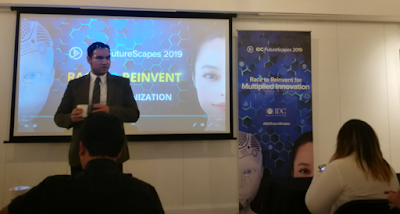

"To be digitally determined, Philippine organizations require more than just resilience; they need a 'blueprint' that consists of a unified enterprise strategy, a long investment plan based on the principle that digital is inherently valuable to the business, and a single digital platform to scale technology innovations," said Sudev Bangah, Managing Director for IDC ASEAN. "But aside from these technical aspects, digital determination involves having the will to make the required organizational and cultural changes to better adapt in today’s digital transformation age," he added.


Bangah added, "New technologies are changing paradigms for individuals, businesses, industries, economies, and governments. The race to the future enterprise has begun. And with digital disruption becoming the new normal, no one and no entity will be spared of the need to at least reset or reboot themselves, if not reinvent."IDC puts together 10 Key Trends Opportunities and Challenges for IT Managers for 2019 and Beyond.

IDC puts together 10 Key Trends Opportunities and Challenges for IT Managers for 2019 and Beyond:

#1: Digital determination. By 2020, at least 30% of organizations will be digitally determined, transforming markets and reimagining the future through new business models and digitally enabled products and services.


#2: Digital trust. By 2020, 40% of CIOs will initiate a digital trust framework that goes beyond preventing cyberattacks and enables organizations to resiliently rebound from adverse situations, events, and effects.


#3: Digital KPIs. By 2023, 55% of entities will have incorporated new digital KPI sets – focusing on product/service innovation rates, data capitalization, and employee experience – to navigate the digital economy.


#4: Data monetization. By 2021, 40% of large enterprises will create data management or
monetization capabilities, thus enhancing enterprise functions, strengthening competitiveness, and creating new sources of revenue.


#5: BizOps. By 2021, 45% of CIOs will expand agile/DevOps practices into the wider business to achieve the velocity necessary for innovation, execution, and change.


#6: Digital twin. By 2023, 30% of the Philippines' top 1,000 companies will have implemented advanced digital twins of their operational processes, which will enable flatter organizations and onethird-fewer knowledge workers.


#7: AI-driven edge. By 2023, over 30% of organizations' cloud deployments will include edge computing, and 15% of endpoint devices and systems will execute AI algorithms.

#8: Blockchain-enabled DX platforms. By 2023, prominent in-industry value chains, enabled by blockchains, will have extended their digital platforms to their entire omni-experience ecosystems, thus reducing transaction costs by at least 30%.


#9: AI is the new UI. By 2024, AI-enabled user interfaces and process automation will replace onethird of today's screen-based applications. By 2022, 30% of enterprises will use conversational speech technology for customer engagement.


#10: AI governance. By 2022, 30% of enterprises will task CIOs to transform and modernize governance policies to seize the opportunities and confront new risks posed by AI, machine learning, and data privacy and ethics.


Read More »

Tuesday, October 23, 2018

Hikvision Bring Smarter Security with Artificial Intelligence

Hangzhou Hikvision Digital Technology Co., Ltd. (Hikvision), the world’s leading provider of innovative security products and solutions, recently embarked on an AI Tour across 40 countries spanning Asia, Africa, Middle East, Oceania, and Latin America. In the tour’s stop in the Philippines, Hikvision showcased AI innovations covering AI Cloud architecture, AI technologies, AI products, and other vertical solutions.


In today’s digital age, Artificial intelligence (AI) has begun to revolutionize how we live, work and play. AI is offering businesses the prospect of increased productivity and innovation, while at the same time also enabling society to help solve some of its most persistent challenges -- like disease, natural disasters, and security.

Ray Wu, General Manager of Hikvision

“As AI becomes more common and more powerful, deep learning will soon become the foundational technology for the security industry. AI will strengthen critical security efforts in every sphere, with new machine learning techniques giving CCTV cameras the ability to spot troubling behavior without human supervision,” said Ray Wu, General Manager of Hikvision. 

Deep learning is the next level of AI development. It is beyond machine learning where supervised classification of features and patterns are set into algorithms. Rather, deep learning incorporates unsupervised or “self-learning” principles. “Hikvision is building deep learning into its own analytics algorithms. The result of multi-layer learning and extensive data collection is enhanced accuracy and improved analytics. And this applies to vehicle and human recognition,“ explained Mr. Wu.


Based in Hangzhou, China, Hikvision is a pioneer in intelligent video surveillance and has created diversified products and solutions that utilize AI to address today’s modern challenges. In Hikvision’s AI tour, the company introduced several product models equipped with deep learning algorithms:


  • EXIR Flexible PanoVu Network Camera - This camera features 1/2.7" progressive scan CMOS sensors and four lenses with each lens supporting 1080p resolution at 30fps. A compression of up to H.265+ saves bandwidth and storage space. The EXIR is capable of 6 behavior analyses as well as 4 exception detections.
  • PanoVu PT Series 2MP + 2MP Target Capture Camera - This camera is able to capture distant images as well as close-up images with the integration design of distant view camera and tracking PTZ camera. This series can be widely used in situations where wide monitoring range and high definition are required, such as the entrance or exit of an airport, park, or station. 
  • 2MP 25× IR Network Speed Dome - The speed dome is a DarkfighterX series camera that adopts the patented dual-sensor design to process color and brightness independently, and outputs one full-color image. It is equipped with deep-learning-based target classification algorithms for auto-tracking and perimeter protection.
  • Facial Recognition Server - Powered by deep learning technology, the server incorporates algorithms for identity confirmation and support for up to 1 million blacklisted targets. It is compatible with third-party cameras and meets varied scenario requirements, including shopping malls and public squares.
  • LPR Camera - Powered by Hikvision’s deep learning AI algorithm, this camera can identify more than 6 types of Philippine license plate numbers, including both private and public utility vehicles, at 90% accuracy. Hikvision is dedicated to optimizing its LPR algorithm and expects to up its accuracy to 95% by 2019.


Hikvision has introduced a series of products that can accurately detect, recognize, and analyze human, vehicle, and object features and behavior, and can be widely used in indoor and outdoor scenarios. “With AI, CCTV cameras now have the digital brains to match their eyes, letting them analyze live video with no humans necessary. AI is a game-changer, and we’re seeing firsthand how that technology can be used to guard against theft and improve security,” said Evelyn Ativo, Product Group Head of Iontech Inc., one of the key players in the Information Technology distribution industry in the Philippines.
Read More »

Thursday, October 4, 2018

Hikvision AI Tour 2018 Next Stop Philippines

Hikvision, world’s leading provider of innovative security products and solutions based in Hangzhou, China, embarks on an AI Tour across 40 countries spanning Asia, Africa, Middle East, Oceania, and Latin America until November this year. The company is set its AI Tour in the Philippines.

Empowered by AI and years of expertise, Hikvision is now a pioneer in intelligent video surveillance. Has diversified products and solutions that utilizing AI to address today’s modern challenges:


  • Intelligent Traffic System – Hikvision Intelligent Traffic Solution helps reduce impact from events and incidents on heavily trafficked roads and motor ways.
  • Smart Retail – Hikvision Smart Retail Solution packs video surveillance, business intelligence and parking area data into complete end-to-end solutions for various shopping areas.


“Shaping Intelligence: Hikvision AI Tour 2018 Philippines”, the tour next stop is the Philippines happening this October 18 at the Marco Polo in Ortigas, Manila. It will showcase Artificial Intelligence innovations covering AI Cloud architecture, AI technologies, AI products, and other vertical solutions, especially for Intelligent Traffic Systems.

Iontech Inc., one of the key players in the Information Technology distribution industry in the country, has partnered with Hikvision to bring the AI tour to the Philippines. “As we promote reliable computer systems and communication devices in the Philippines, we continue to look at revolutionary technologies like AI. AI is changing the world, and its enabling businesses all over the world address modern problems in an intelligent and efficient way. We’re very excited to partner with Hikvision to showcase the power of AI,” said Iontech’s Product Group Head, Evelyn Ativo.


See how AI technology is transforming video surveillance at the Philippine leg of the Hikvision AI Tour. Visit https://www.facebook.com/HikvisionPhilippines/ for more details.

Interesting innovations here especially Intelligent Traffic System. Hopefully our Government and line agencies will take note as these new innovation may solve our traffic problem in the Metro and key cities in the country.

Read More »

Thursday, April 19, 2018

Asia, Next Frontier Artificial Intelligence Development

Today, Artificial Intelligence (AI) is at the center of the digital transformation of organizations and even nations. By 2019, IDC predicts that 40% of digital transformation initiatives in the region will be supported by AI.

(Read here about how digital transformation will contribute more than US$1 trillion to Asia Pacific GDP by 2021, where AI is a primary catalyst for further growth)


Artificial Intelligence (AI) has been thrust into the tech limelight – elevating itself from science-fiction topic to one that is currently dominating conversations of today across Asia. The convergence of big data, ubiquitous and powerful cloud computing, along with breakthroughs in software algorithms and machine learning, have made exciting new scenarios in AI deployment a possibility.

With imagination and plenty of data, AI can create vast benefits at scale. In Japan for example, where Miko, an AI-power chatbot and the star of new mobile travel app Japan Trip Navigator, is helping tourists in Japan navigate its streets. Created by Microsoft in partnership with travel agency JTB Corp and navigation firm NAVITIME Co, Miko provides travelers in Japan with real-time information from official sources as well as insights from other users of the apps. Miko can also help with hotel and other bookings on the app.


What’s more, one of the more advanced and interesting capabilities of Miko is that it is imbued with image recognition functions using Microsoft’s Cognitive Services AI platform, enabling her to provide information to users through the photos that they have taken.

Asia will be key to AI Development Globally. There are three reasons why Asia:

1. AI needs data: AI is dependent on data to perform; the more data that is fed into an AI system, the better it gets. Not only does Asia have the world’s largest population, it continues to be a region that is more digitally-connected than other parts of the globe and hence can provide the massive amounts of data that AI systems need to grow.

2. AI needs talent: Whilst we anticipate the mass adoption of AI this year, there is still a long way to go for more powerful and sophisticated AI programs to be developed. To do that will require a large and strong pool of science, technology, engineering and mathematical (STEM) talents that technology companies and research bodies can tap into to advance AI capabilities. And this talent is increasingly likely to originate from Asia. According to UBS, by 2025 the combined AI talent pool of China and India alone will exceed that of the US.


3. AI needs adoption: As stated, the more data that is fed into an AI system, the better it gets. One of the unique aspects of Asia is its large youth population, that have been born into a digital world. The UN estimates that 60% of the world’s youth population is in Asia Pacific. These “digital natives” are more receptive to digital technologies enhancing their lives. Not only that, but many Asian countries are, historically, late adopters of legacy technology, enabling them to leapfrog other nations dependent on old infrastructure and embrace new ways of living and working.

Xuedong Huang, technical fellow in charge of Microsoft’s speech, natural language and machine translation efforts. (Photo by Scott Eklund/Red Box Pictures)

Microsoft’s AI investment in Asia

With the immense growth potential of AI in Asia, Microsoft has identified four key building blocks  to harness AI optimally.

1. Developing AI capabilities: The AI revolution will not happen without world-class STEM talents driving R&D, and creation of programs and applications. Collaboration among governments, industry bodies and organizations to develop AI capabilities in this region will need to be a focus. A good example of this is Microsoft’s investment of US$33 million in partnership with the Taiwanese Government to create a AI R&D Hub in Taiwan to help transform the island’s technology and industrial sector.

2. Developing partner ecosystem: Microsoft is focused on transforming IT partner ecosystem across Asia to enable them to bring AI capabilities to the markets. In fact, they are committing $500m over the next two years to offer joint sales engagements with startups, along with access to our technology, and new community spaces that promote collaboration across local and global ecosystems.

3. Creating the AI platform: Microsoft continues to strengthen its hyper-scale cloud platform – Microsoft Azure – and its ability to deliver AI programs at scale securely across the world. Today, Azure is available to customers in 140 countries worldwide via 50 Azure regions across the world, more than any other cloud provider, which includes 15 here in Asia. This offers customers and partners the platform needed to deliver

4. Re-skilling Asia’s workforce: Microsoft is committed to working with public and private organizations to help re-skill existing workforce to thrive in a new AI-driven digital world. For example, the recently launched National Skills Program in South Australia provides digital skills to automotive supply chain workers whose roles were displaced by the closure of the Holden manufacturing plant in Elizabeth in late 2017.

Industry experts believe this to be Asia’s century. And Artificial Intelligence offers the region an unprecedented opportunity for growth, productivity and innovation, as well as the potential to solve some of the region’s most important societal challenges.

The revolution has begun! so strap in... It will certainly be an interesting ride.

Read More »

Sunday, November 12, 2017

Huawei Mate 10 now on Pre-Order! Price Specs Philippines

Huawei latest flagship, Huawei Mate 10 is all set for a grand release.


Beautifully crafted with curved glass accented with signature stripe  highlighting dual lens leica cameras. Houses a 5.9 inch 16:9 2560 x 1440 pixels LCD Display plus HDR10 technology for rich, vivid and immersive viewing pleasure.


Next top grade visuals, comes  performance class processing with cutting-edge with Kirin 970 is world’s first Kirin AI processor brings you a faster, stronger, and seamless smartphone experience. At 8-core at 10 nm tech acommpanied by 12-core GPU plus Neural-Network Processing Unit (NPU) delivering AI computation capabilities that boost efficiency and performance. For memory it gets a 4GB RAM and 64GB Internal Storage. You can expand storage via MicroSD via Mate 10 hybrid slot.


Huawei Mate 10 gets a New Leica Lens with 20MP Monochrome + 12MP RGB 1.6 aperture for shallow depth of field as well as better low light performance. AI also does it's magic with intelligent photographic algorithms and indetifying scene and objects including automatically adjusting color, contrast, exposure and more to produce vibrant, sharp, perfectly tuned photos. Same goes for bokeh effects by shifting the focal point onto the subject of the photograph.  Dual OIS ensures steady shots and prevents blur. For Front camera, it is at 8MP FF, f/2.0 aperture.


Take your experience to the next level and link your HUAWEI Mate 10 to a larger screen via USB Type-C DisplayPort 1.2. Get that PC-like interface with working with your apps and productivity.
Speaking of connectivity, it comes with complete set - WiFi, Bluetooth, GPS and NFC. Huawei Mate 10 is a Dual Sim Handset but if you need additional storage then you need to sacrifice one slot for MicroSD.


Mate Series has been a champion in terms of battery life. Still carries 4000mAh but with AI, it will be automatically be enhanced for battery efficiency.


Pre-Order has now started at select Huawei Retailers and Concept Stores. SRP is at 32,990 and will come packaged with Huawei Super Charge 10,000mAH Power Bank. Pre-ordered Huawei Mate 10s will be available for pick-up starting November 17, 2017, while the Huawei Super Charge Powerbank will be available for pick-up on November 27, 2017.

Huawei Mate 10 Specs:
Android™ 8.0 Oreo
Huawei EMUI 8.0
5.9" HUAWEI FullView 16:9 LCD Display
2560 x 1440* pixels resolution
HUAWEI Kirin 970 Octa-core Processor
Mali-G72 MP12 GPU
4GB RAM
64GB Internal Storage
Expandable via MicroSD (via hybrid slot)
20MP Monochrome + 12MP RGB Camera
PDAF+CAF+Laser+Depth auto focus
BSI CMOS + f/1.6 aperture
OIS (Optical image stablization)
Dual-LED flash
8MP Fixed Focus, f/2.0 aperture
Audio: Support aptX/aptX HD and LDAC HD Audio
4G LTE / HSPA+ / 3G / 2G
Dual Sim, Dual Standby (Hybrid)
Wi-Fi 2.4G/5G, 802.11a/b/g/n/ac with Wi-Fi Direct support
BT4.2, support BLE
GPS/Glonass/BDS
USB Type C
DisplayPort 1.2
SENSORS:
Fingerprint Sensor, G-Sensor, Gyroscope sensor, Compass, Ambient Light Sensor, Proximity sensor, Hall sensor, Barometer, Infrared remote control
4000mAh Battery
Huawei Super Charge
Read More »