
Showing posts with label IDC. Show all posts

Friday, February 1, 2019

IDC Philippines Reveals TOP ICT Predictions for 2019 and Beyond.

IDC Predicts for 2019 and beyond by 2020, at east 30% of organizations and companies will push for "digital determination" by re-imagining the future through innovative business models and digitally enabled products and services transformation their respective markets, operations and businesses.
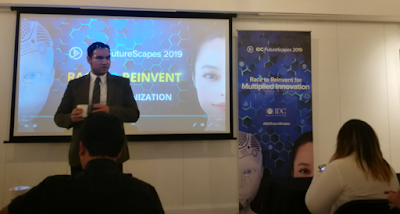

"To be digitally determined, Philippine organizations require more than just resilience; they need a 'blueprint' that consists of a unified enterprise strategy, a long investment plan based on the principle that digital is inherently valuable to the business, and a single digital platform to scale technology innovations," said Sudev Bangah, Managing Director for IDC ASEAN. "But aside from these technical aspects, digital determination involves having the will to make the required organizational and cultural changes to better adapt in today’s digital transformation age," he added.


Bangah added, "New technologies are changing paradigms for individuals, businesses, industries, economies, and governments. The race to the future enterprise has begun. And with digital disruption becoming the new normal, no one and no entity will be spared of the need to at least reset or reboot themselves, if not reinvent."IDC puts together 10 Key Trends Opportunities and Challenges for IT Managers for 2019 and Beyond.

IDC puts together 10 Key Trends Opportunities and Challenges for IT Managers for 2019 and Beyond:

#1: Digital determination. By 2020, at least 30% of organizations will be digitally determined, transforming markets and reimagining the future through new business models and digitally enabled products and services.


#2: Digital trust. By 2020, 40% of CIOs will initiate a digital trust framework that goes beyond preventing cyberattacks and enables organizations to resiliently rebound from adverse situations, events, and effects.


#3: Digital KPIs. By 2023, 55% of entities will have incorporated new digital KPI sets – focusing on product/service innovation rates, data capitalization, and employee experience – to navigate the digital economy.


#4: Data monetization. By 2021, 40% of large enterprises will create data management or
monetization capabilities, thus enhancing enterprise functions, strengthening competitiveness, and creating new sources of revenue.


#5: BizOps. By 2021, 45% of CIOs will expand agile/DevOps practices into the wider business to achieve the velocity necessary for innovation, execution, and change.


#6: Digital twin. By 2023, 30% of the Philippines' top 1,000 companies will have implemented advanced digital twins of their operational processes, which will enable flatter organizations and onethird-fewer knowledge workers.


#7: AI-driven edge. By 2023, over 30% of organizations' cloud deployments will include edge computing, and 15% of endpoint devices and systems will execute AI algorithms.

#8: Blockchain-enabled DX platforms. By 2023, prominent in-industry value chains, enabled by blockchains, will have extended their digital platforms to their entire omni-experience ecosystems, thus reducing transaction costs by at least 30%.


#9: AI is the new UI. By 2024, AI-enabled user interfaces and process automation will replace onethird of today's screen-based applications. By 2022, 30% of enterprises will use conversational speech technology for customer engagement.


#10: AI governance. By 2022, 30% of enterprises will task CIOs to transform and modernize governance policies to seize the opportunities and confront new risks posed by AI, machine learning, and data privacy and ethics.


Read More »

Tuesday, September 25, 2018

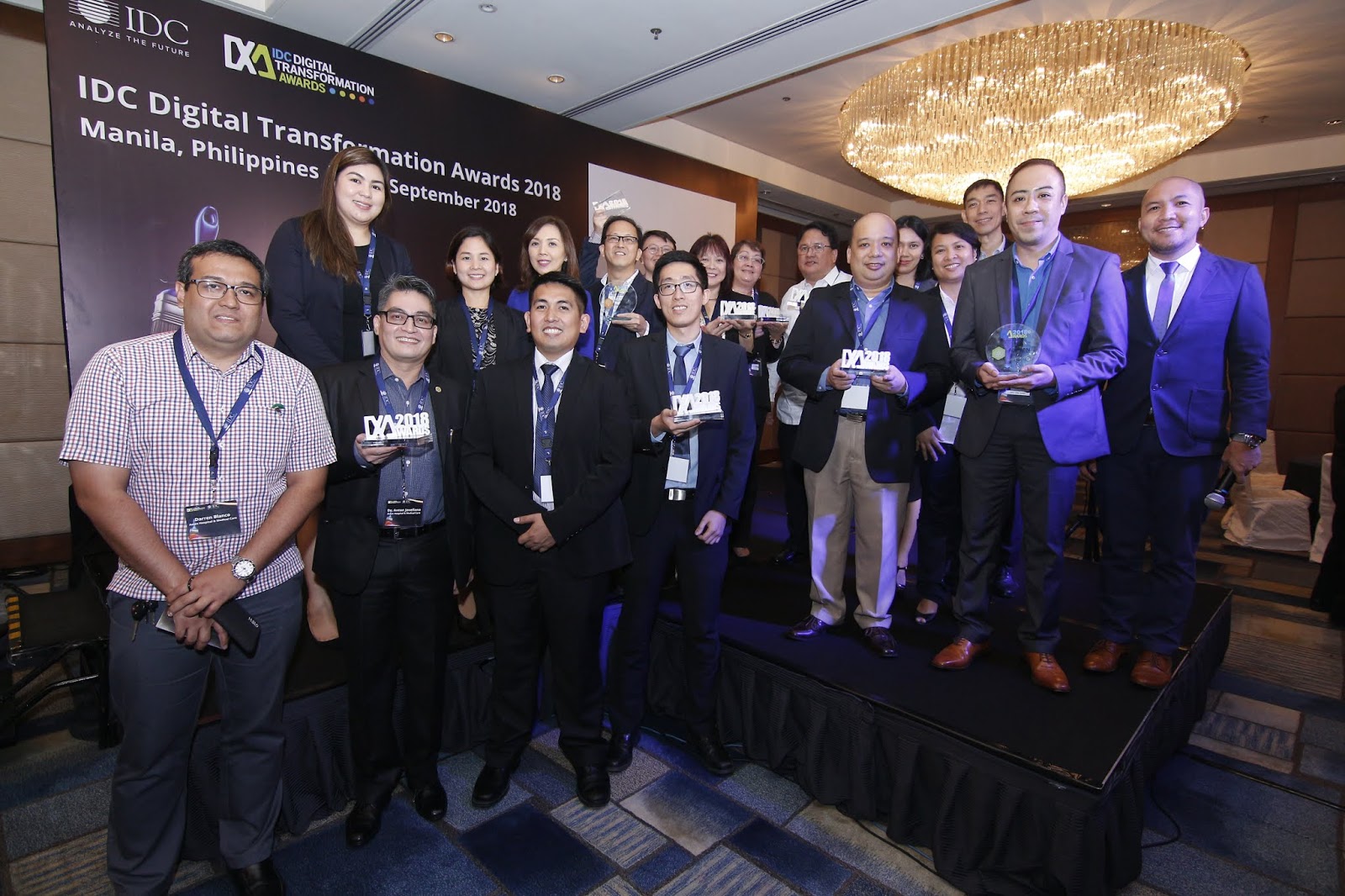
IDC Announce Philippine IDC DX Awards 2018 Winners

MANILA, September 20th, 2018 – IDC announced today the winners from the Philippines of the second IDC Digital Transformation Awards (DXa) at the IDC DX Awards 2018 Philippines held at Makati Shangri-La Hotel.


IDC DX Awards recognizes organizations that have significantly disrupted the market or have transformed it, using digital and disruptive technologies. All the seven winners from the Philippines will represent the country to go head-to-head with winners from other Asia Pacific countries at the regional finals in Singapore on 25th October. These winners have distinguished themselves in terms of business transformation initiatives across one or more of the five DX masteries to transform and disrupt the market in the Philippines.

“This year’s nominations have proven that all industries are keen on improving their business processes and client engagement. We have seen interesting projects on cognitive computing/AI, Big
Data and Analytics, IoT, robotics and robotics process automation being utilized across vertical
industries, among others. This signifies that DX has achieved a macroeconomic scale and has become an important tool for Philippine businesses to achieve success,” said Jubert Alberto, Head of Operations, IDC Philippines.

“The Philippine businesses are commonly working in silos. As they commit to transform their
businesses, these organizations have been establishing an enterprise-wide digital strategy that
could help address IT challenges across all business units. IDC believes this is the main priority for
the local enterprises, as it will help them in crafting out a unified digital roadmap and strategy that
will provide an overall holistic change in the culture, people, and business processes. Constant
engagement and strong collaboration between IT and Line of Business (LOB) are needed for this
initiative, therefore, awareness of emerging technologies such as cloud, Internet of Things (IoT), and
big data and analytics (BDA) should continuously grow for digital transformation to take place,” said
Sudev Bangah, Managing Director, IDC ASEAN.

The Winning Organizations in the Philippines for the 2018 IDC DX Awards and their outstanding DX initiatives that distinguished them are:

Union Bank of the Philippines named as Digital Transformer of the Year: Union Bank of the Philippines (UnionBank) is relentless in its pursuit to transform into a Digital Bank, with a culture of innovation and experimentation changing the way how the UnionBank engages with clients and employees alike. Digital transformation is evident in all aspects of the business with projects including the use of artificial intelligence in customer-facing chatbots, deployment of an open API strategy for its partners, and implementation of Robotic Process Automation in centralized backroom operations for the creation and submission of financial reports and in other tasks leading to a decrease of up 80% in processing time. The bank has also given focus to improving customer experience through the launch of its new mobile app and website, which has driven customer interactions from 26% to 98% of all total customer interactions since 2017. Its most recent initiative is The Ark, UnionBank's first fully digital lifestyle branch. The
Ark champions an interactional experience rather than a transactional space, with features that allow customers to open new accounts in less than 10 minutes with virtual telling machines and apply for home and auto loans with augmented and virtual reality experiences.

ALLCARE’s ALLCARE named as Digital Disruptor of the Year: ALLCARE addresses the compensation gap where the alternative workforce, composed of freelancers, solo entrepreneurs, professionals, and other informal workers do not have access to care and welfare that traditional employees have. ALLCARE aggregates freelancers’ benefits demand around the world and uses economies of scale to make benefits affordable and accessible to them. Utilizing blockchain technology, ALLCARE helps open this new and underserved market to providers without sacrificing operational costs through the usage of fully automated transactions in smart contracts. By incentivizing both workers and benefit providers through real-world value and utility, ALLCARE has grown to be a major disruption in the workforce technology space.
Philippine Health Insurance Corporation’s Data-driven Transformation of PhilHealth led by Jovita Aragona, Senior Vice President and CIO named as DX Leader of the Year and Information Visionary of the Year: PhilHealth is the sole administrator of national social health insurance for all Filipinos, which makes effective data management a vital to achieve the mandate of providing financial risk protection to the entire population. Led by Jovita Aragona, Senior Vice President and CIO, PhilHealth’s data management strategy commenced in 2016 with business intelligence and cloud technologies. As it broke down traditional barriers to efficiency, information accessibility-availability, and collaboration, data became a strategic asset for PhilHealth. With integrity of mission-critical data, system- and process- harmonization, and standard data report-analysis-mining techniques, PhilHealth has improved its programs and services for Filipinos through a comprehensive analysis of health insurance claims over time periods, diseases, social classes, national-LGU geographical areas, demographics, benefits programs, payment schemes, and other insurance-health dimensions. With advanced analytics, artificial intelligence, and machine learning, PhilHealth has also initiated a framework in detecting fraud and abuse in insurance claims. Finally, data on hand has also empowered PhilHealth to support the Department of Health in the creation of health programs, control of real-potential epidemics and emerging health conditions and trends, and synchronization of Universal Health Care initiatives.

Traci of Manila Electric Company (MERALCO) named as Talent Accelerator of the Year: After discovering a growing talent pool on social media, MERALCO launched its chatbot TRACI to support the Talent Resourcing team's initiative to optimize and streamline the job application process and establish an additional medium for engagement. TRACI enables users view job vacancies and submit applications via Facebook Messenger. TRACI is integrated with Google's artificial intelligence platform, which serves as the foundation for the chatbot’s Natural Language Processing, allowing MERALCO to provide timely feedback on job inquiries and application status.  All backend services are hosted and supported on the cloud with a document management system that holds all applicant submissions. Data about job vacancies posted are populated using Robotic Process Automation, which runs daily to support the process. With TRACI, MERALCO leverages digital technology to efficiently communicate to a younger generation of talent, positively impacting brand equity and recruitment capabilities.

Asian Hospital and Medical Center’s Hopprlab Power Bi Analytics named as Information Visionary of the Year: The Asian Hospital and Medical Center (AHMC) is committed to data-driven healthcare and has leveraged advanced analytics provide better services to its patients while lowering the total cost of care. Through the integration of digital technologies and modern medicine, AHMC is better equipped to deliver quality healthcare to it is patients. The hospital began digitalization in 2016, with its integrated information system delivering real-time insights on daily operations. AHMC has also gained the ability to understand historical trends, with such as month-on-month patient surges and ER overflows, and at the same time, learn about changing risk factors and new infectious diseases. AHMC has been able to make strategic data-driven decisions to make further
improvements on its infrastructure, facilities, and manpower utilization, which includes nurses and specialists. Having also digitized the hospital’s lab information, the AHMC Medical Informatics department is now working with the hospital's pharmacy module to provide further support to doctors in their clinical decisions. AHMC has also implemented a Patient Flow System, which allows doctors to understand the end-to-end patient journey, lowering the average Emergency Room to exit time to three hours, exceeding international standards.

Unilab Implements NetSuite OneWorld to Transform B2B Operations named Operating Model Master: Unilab, the largest pharmaceutical company in the Philippines is the first in its industry to leverage cloud ERP to standardize and stabilize its distributor management program through its iSERV 2.0 project. With NetSuite OneWorld, Unilab has helped power its 21 distributors by setting them up as individual partners. By upgrading to a unified cloud ERP system, Unilab has enabled its distributors to easily manage inventory and billing processes of over 10,000 trade accounts, such as drug stores, clinics, and grocery stores. Unilab has also used this system for sales and data consolidation and multisubsidiary management. Since the completion of this transformation in January 2017, Unilab has streamlined operations for its distributors and has gained greater visibility into the channel, contributing to its US $1 billion revenue.

PhilCare’s HeyPhil App named Omni-Experience Innovator of the Year: To assist members who need immediate consultation but must go through long queues and slow turnaround times to acquire a Letter of Authorization (LOA) forms required in medical services ailment, Philhealth Care, Inc. (PhilCare) has developed HeyPhil, a mobile application utilizing Artificial Intelligence technology. A first in the local HMO industry, PhilCare has incorporated Artificial Intelligence with the function of a virtual agent to help obtain information using natural language processing. Through the HeyPhil App, members can generate the LOA at their own convenience and avail of medical services directly without queuing at a hospital or clinic concierge.  From the usual average handling time of 6 minutes
at a medical partner or via the contact center and 30 minutes queuing at a hospital concierge, members can now get their own forms in less than two minutes. HeyPhil also provides the nearest physician, hospital, or clinic based on patient symptoms and location. Aside from LOA generation for consultations and laboratory procedures, members may also validate their eligibility and standard medical benefits. Finally, the app features a PhilCare Digi-Card, BMI and calorie calculators, and medical health bulletins and offers digital consultation with an online doctor.

IDC’s DX Awards follows a two-phased approach to determine the country and regional winners.
Each nomination is evaluated by a local and regional IDC analyst against a standard assessment
framework based on IDC’s DX taxonomy. All country winners will qualify for the regional competition, which will be decided by a regional panel of judges comprised of IDC Worldwide analysts, industry thought leaders, and academia.

Winners from all around Asia Pacific will join the Singapore winners at IDC's DX Summit and Digital Transformation Awards (DXa) Gala Night, where the regional winners will be announced for the categories of Digital Transformer of the Year; Digital Disruptor of the Year; DX Leader, Omniexperience Innovator, Talent Accelerator, Information Visionary, and Operating Model Master. 
The regional awarding ceremony will happen on the 25th October 2018 at JW Marriott Singapore.
Read More »

Wednesday, January 13, 2016

IDC Top Predictions Philippine ICT Industry for 2016

IDC Philippines announced today its top predictions for the Philippine ICT industry, which underscores the importance of digital transformation (DX) in driving business growth for both enterprises and small and medium-sized enterprises (SMEs) on the 3rd Platform and innovation accelerators to transform them into a digitally-led organization in order to capture value-producing opportunities, pursue new revenue streams, and change the existing business model.


3rd Platform technologies include the 4 pillars of cloud, mobility, Big Data Analytics, and Social, as well as the 6 innovation accelerators of IoT, cognitive computing, robotics, 3D printing, virtual/augmented reality, and next-gen security.

Jubert Alberto, country head, IDC Philippines, says, “Companies in the Philippines that do not start a DX initiative will find themselves struggling to respond to changing market demands and competitive pressures. Digitalization has been heightening industry competition as it paves the way for business process excellence and new monetization and business models. Given increasing industry disruptions brought about by digitalization, it is high time for Philippine enterprises and SMEs to make the move into DX to help them scale up in leadership, omni-experience, information, operating models, and worksource transformation.”

Moreover, Alberto adds, "IT leaders in every Filipino organization must transform the IT organization into a true business transformation engine through IDC's new DX leadership framework, Leading in 3D or 3-Dimensional Leadership. Its goal is to 'Innovate', 'Integrate,' and 'Incorporate' IT within the organization to achieve business-driven objectives." This year, IDC’s top predictions are rebranded as IDC FutureScapes for both technology buyers/CxOs and ICT suppliers.

#1: DX-guided enterprise strategy. By the end of 2019, 80% of enterprise strategies will include a significant DX component.

"Globalization, availability of analytics, and the Internet as an economic engine require nearly every enterprise strategy and significant business change initiative to involve some aspect of 'digital,' whether it is improving customer experience or internal operations or creating digital products and services. DX is leveraging IDC's 3rd Platform — cloud, mobility, Big Data and analytics (BDA), and social business — to improve business agility, effectiveness, and customer satisfaction," says Alon Anthony Rejano, analyst, IDC Philippines.

#2: Authentic experiences. By 2020, 80% of Filipino B2C companies will have created an immersive and authentic omni-experience for customers, partners, and employees. 

Jerome Dominguez, analyst, IDC Philippines, states, "In the past, effective marketing for Filipino enterprises meant investing huge sums of money on traditional media such as print and TV. Today, the continuous digital transformation is changing the way Filipino consumers respond to marketing. Filipino consumers are making more use of social media than they  used to in the past, hence there is a greater need for companies to assess how they market their products and services in the digital space."

#3: Security and risk management. By 2017, 30% of IT organizations will shift their focus to advanced "contain and control" security and away from a perimeter mentality. 

“By 2017, IDC expects traditional Philippine enterprises to be forced to make significant operational changes to adjust to the accelerating disruption in the ICT industry. As Filipino enterprises evolve to an information-led, information-centric business model, the strategic importance of a strong security governance model will be critical as the uptake of 3rd Platform technologies among businesses will widen the attack surface,” says Dominguez.

#4: Government focus on ICT. Digitalization at a national level will continue to be a challenge but significant push will be felt in 2016.

 “Although there are administrative hurdles stalling progress, IDC expects the Filipino government to pursue eGovernment initiatives geared toward digitalizing processes and improving transparency more actively this 2016. This also includes initiatives around Smart City and public WiFi systems in major centers in the country,” says Dominguez.

#5: Enterprise “tingi pack.” By the end of 2016, enterprise “tingi pack” for cloud and IT services will thrive among SMEs. 

“The enterprise tingi pack is going to be common in the consumption of IT products and services. As the demand for cloud and other IT services increases among local SMEs, the pay-as-you-go model will not only help grow the providers’ business but also support SMEs in starting a business using IT tools that are budget-friendly, flexible, and competitive,” says Rejano.

#6: Realign suppliers and partners. By 2020, more than 30% of the IT vendors will not exist as we know them today, requiring a realignment of preferred vendor relationships. 

The new technologies, offerings, business models, competitors, partners, and buyers in the emerging DX economy are putting tremendous pressure on traditional IT suppliers and accelerating some new players to market leadership roles. Over the next several years, we will see nonstop shifts in vendor fortunes, with almost one-third of today's leading suppliers acquired, merged, downsized, or significantly repositioned. “While the traditional IT suppliers are all migrating their offerings and organizations to the 3rd Platform and DX worlds, providing the customers migration paths, the impact is that they may or may not emerge from that transition as market leaders,” says Rejano.

#7: Skills-based marketplaces. By 2016, skills-based virtual coworkers in the Philippines will continue to grow, spurring 3rd Platform usage and further outsourcing opportunities. 

Nicolo Santos, analyst, IDC Philippines, says, "Online freelance jobs are taking off, offering job opportunities to many Filipinos at the comfort of their homes. As of 2015, there are approximately 1.3 million online freelancers in the Philippines, a number considered to be one of the highest in the world. By 2016, there will be an additional 500,000 web-based workers to be employed in different online job platforms, specifically coming from the countryside, according to the Department of Science and Technology (DOST)."

#8: Digitalized brick and mortar stores. By 2020, "brick and mortar" stores will provide retailers with new sources of data to create bigger traction and increase patronization and customer base through digital experiences. 

An effective way by which an eTailer venturing into offline channel can effectively differentiate itself from its competition is through coming up with a digital store strategy of its “brick and mortar” estate to provide a personalized customer experience akin to online.
Digitalizing “brick and mortar” stores does not only entail deployment of cutting-edge technology solutions to improve in-store experience; it also makes way for competitive data gathering. “There is a lot of potential to be realized from analyzing the multiple data sources generated from digitalizing physical stores — information that will allow retailers to both identify and target casual shoppers and, in the process, allow them to better position their products and services to stimulate loyalty to their brand,” adds Dominguez.

#9: AiO cards. By 2019, Filipinos will use all-in-one (AiO) cards more predominantly as DX allows bridges of retail payment methods to become more interconnected. 

"With a flourishing retail industry, IDC believes that payment processes will be evolving significantly quicker than before as digital disruptions continue to come about. Just recently, Manila’s Railway Systems (MRT, LRT 1, and LRT 2) started offering reloadable cards that can be topped up online. This is an auspicious start in the government’s drive to digitalizing payment methods," says Linus Go, analyst, IDC Philippines.

#10: DX adoption in various sectors. DX will start to take off in "non-IT-intensive" industries like agribusiness and resource industries in 2016. 

IDC expects businesses in non-IT-intensive industries such as agriculture, agribusiness, and resource industries to adopt 3rd Platform technologies to bring innovations in their business models and consumption patterns. “The introduction of new information and communication technologies (ICT) in these industries could make these industries more sustainable as it transforms the businesses and drive more organizations to pursue innovation-centric
projects with ICT at their core,” says Rejano. 
Read More »