
Showing posts with label Digital Transformation. Show all posts

Friday, February 1, 2019

IDC Philippines Reveals TOP ICT Predictions for 2019 and Beyond.

IDC Predicts for 2019 and beyond by 2020, at east 30% of organizations and companies will push for "digital determination" by re-imagining the future through innovative business models and digitally enabled products and services transformation their respective markets, operations and businesses.
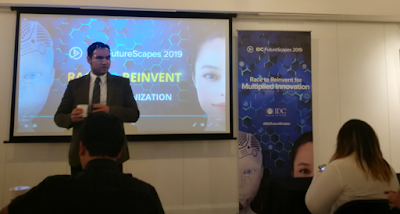

"To be digitally determined, Philippine organizations require more than just resilience; they need a 'blueprint' that consists of a unified enterprise strategy, a long investment plan based on the principle that digital is inherently valuable to the business, and a single digital platform to scale technology innovations," said Sudev Bangah, Managing Director for IDC ASEAN. "But aside from these technical aspects, digital determination involves having the will to make the required organizational and cultural changes to better adapt in today’s digital transformation age," he added.


Bangah added, "New technologies are changing paradigms for individuals, businesses, industries, economies, and governments. The race to the future enterprise has begun. And with digital disruption becoming the new normal, no one and no entity will be spared of the need to at least reset or reboot themselves, if not reinvent."IDC puts together 10 Key Trends Opportunities and Challenges for IT Managers for 2019 and Beyond.

IDC puts together 10 Key Trends Opportunities and Challenges for IT Managers for 2019 and Beyond:

#1: Digital determination. By 2020, at least 30% of organizations will be digitally determined, transforming markets and reimagining the future through new business models and digitally enabled products and services.


#2: Digital trust. By 2020, 40% of CIOs will initiate a digital trust framework that goes beyond preventing cyberattacks and enables organizations to resiliently rebound from adverse situations, events, and effects.


#3: Digital KPIs. By 2023, 55% of entities will have incorporated new digital KPI sets – focusing on product/service innovation rates, data capitalization, and employee experience – to navigate the digital economy.


#4: Data monetization. By 2021, 40% of large enterprises will create data management or
monetization capabilities, thus enhancing enterprise functions, strengthening competitiveness, and creating new sources of revenue.


#5: BizOps. By 2021, 45% of CIOs will expand agile/DevOps practices into the wider business to achieve the velocity necessary for innovation, execution, and change.


#6: Digital twin. By 2023, 30% of the Philippines' top 1,000 companies will have implemented advanced digital twins of their operational processes, which will enable flatter organizations and onethird-fewer knowledge workers.


#7: AI-driven edge. By 2023, over 30% of organizations' cloud deployments will include edge computing, and 15% of endpoint devices and systems will execute AI algorithms.

#8: Blockchain-enabled DX platforms. By 2023, prominent in-industry value chains, enabled by blockchains, will have extended their digital platforms to their entire omni-experience ecosystems, thus reducing transaction costs by at least 30%.


#9: AI is the new UI. By 2024, AI-enabled user interfaces and process automation will replace onethird of today's screen-based applications. By 2022, 30% of enterprises will use conversational speech technology for customer engagement.


#10: AI governance. By 2022, 30% of enterprises will task CIOs to transform and modernize governance policies to seize the opportunities and confront new risks posed by AI, machine learning, and data privacy and ethics.


Read More »

Tuesday, September 25, 2018

IDC Announce Philippine IDC DX Awards 2018 Winners

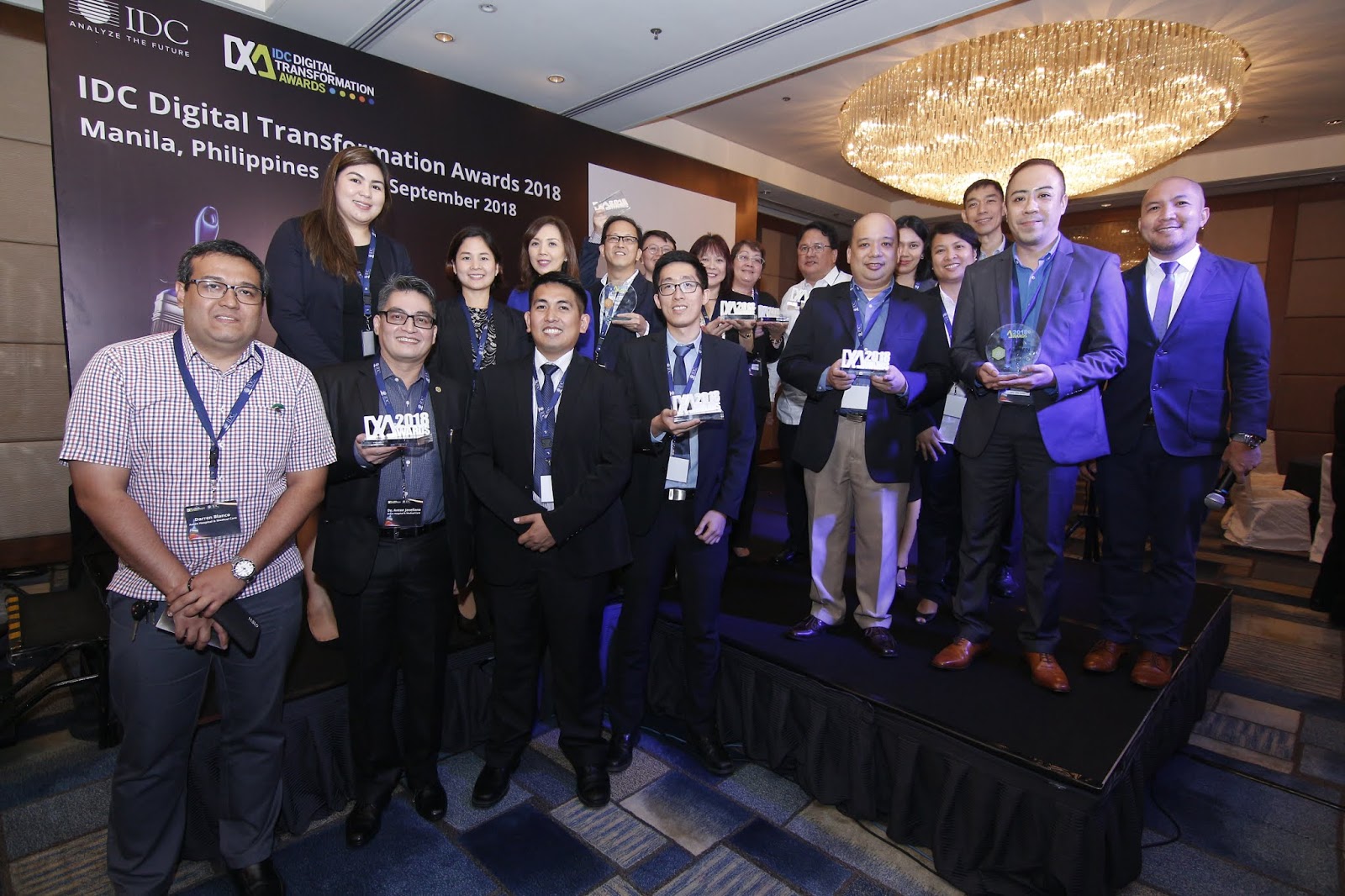
MANILA, September 20th, 2018 – IDC announced today the winners from the Philippines of the second IDC Digital Transformation Awards (DXa) at the IDC DX Awards 2018 Philippines held at Makati Shangri-La Hotel.


IDC DX Awards recognizes organizations that have significantly disrupted the market or have transformed it, using digital and disruptive technologies. All the seven winners from the Philippines will represent the country to go head-to-head with winners from other Asia Pacific countries at the regional finals in Singapore on 25th October. These winners have distinguished themselves in terms of business transformation initiatives across one or more of the five DX masteries to transform and disrupt the market in the Philippines.

“This year’s nominations have proven that all industries are keen on improving their business processes and client engagement. We have seen interesting projects on cognitive computing/AI, Big
Data and Analytics, IoT, robotics and robotics process automation being utilized across vertical
industries, among others. This signifies that DX has achieved a macroeconomic scale and has become an important tool for Philippine businesses to achieve success,” said Jubert Alberto, Head of Operations, IDC Philippines.

“The Philippine businesses are commonly working in silos. As they commit to transform their
businesses, these organizations have been establishing an enterprise-wide digital strategy that
could help address IT challenges across all business units. IDC believes this is the main priority for
the local enterprises, as it will help them in crafting out a unified digital roadmap and strategy that
will provide an overall holistic change in the culture, people, and business processes. Constant
engagement and strong collaboration between IT and Line of Business (LOB) are needed for this
initiative, therefore, awareness of emerging technologies such as cloud, Internet of Things (IoT), and
big data and analytics (BDA) should continuously grow for digital transformation to take place,” said
Sudev Bangah, Managing Director, IDC ASEAN.

The Winning Organizations in the Philippines for the 2018 IDC DX Awards and their outstanding DX initiatives that distinguished them are:

Union Bank of the Philippines named as Digital Transformer of the Year: Union Bank of the Philippines (UnionBank) is relentless in its pursuit to transform into a Digital Bank, with a culture of innovation and experimentation changing the way how the UnionBank engages with clients and employees alike. Digital transformation is evident in all aspects of the business with projects including the use of artificial intelligence in customer-facing chatbots, deployment of an open API strategy for its partners, and implementation of Robotic Process Automation in centralized backroom operations for the creation and submission of financial reports and in other tasks leading to a decrease of up 80% in processing time. The bank has also given focus to improving customer experience through the launch of its new mobile app and website, which has driven customer interactions from 26% to 98% of all total customer interactions since 2017. Its most recent initiative is The Ark, UnionBank's first fully digital lifestyle branch. The
Ark champions an interactional experience rather than a transactional space, with features that allow customers to open new accounts in less than 10 minutes with virtual telling machines and apply for home and auto loans with augmented and virtual reality experiences.

ALLCARE’s ALLCARE named as Digital Disruptor of the Year: ALLCARE addresses the compensation gap where the alternative workforce, composed of freelancers, solo entrepreneurs, professionals, and other informal workers do not have access to care and welfare that traditional employees have. ALLCARE aggregates freelancers’ benefits demand around the world and uses economies of scale to make benefits affordable and accessible to them. Utilizing blockchain technology, ALLCARE helps open this new and underserved market to providers without sacrificing operational costs through the usage of fully automated transactions in smart contracts. By incentivizing both workers and benefit providers through real-world value and utility, ALLCARE has grown to be a major disruption in the workforce technology space.
 
Philippine Health Insurance Corporation’s Data-driven Transformation of PhilHealth led by Jovita Aragona, Senior Vice President and CIO named as DX Leader of the Year and Information Visionary of the Year: PhilHealth is the sole administrator of national social health insurance for all Filipinos, which makes effective data management a vital to achieve the mandate of providing financial risk protection to the entire population. Led by Jovita Aragona, Senior Vice President and CIO, PhilHealth’s data management strategy commenced in 2016 with business intelligence and cloud technologies. As it broke down traditional barriers to efficiency, information accessibility-availability, and collaboration, data became a strategic asset for PhilHealth. With integrity of mission-critical data, system- and process- harmonization, and standard data report-analysis-mining techniques, PhilHealth has improved its programs and services for Filipinos through a comprehensive analysis of health insurance claims over time periods, diseases, social classes, national-LGU geographical areas, demographics, benefits programs, payment schemes, and other insurance-health dimensions. With advanced analytics, artificial intelligence, and machine learning, PhilHealth has also initiated a framework in detecting fraud and abuse in insurance claims. Finally, data on hand has also empowered PhilHealth to support the Department of Health in the creation of health programs, control of real-potential epidemics and emerging health conditions and trends, and synchronization of Universal Health Care initiatives.

Traci of Manila Electric Company (MERALCO) named as Talent Accelerator of the Year: After discovering a growing talent pool on social media, MERALCO launched its chatbot TRACI to support the Talent Resourcing team's initiative to optimize and streamline the job application process and establish an additional medium for engagement. TRACI enables users view job vacancies and submit applications via Facebook Messenger. TRACI is integrated with Google's artificial intelligence platform, which serves as the foundation for the chatbot’s Natural Language Processing, allowing MERALCO to provide timely feedback on job inquiries and application status.  All backend services are hosted and supported on the cloud with a document management system that holds all applicant submissions. Data about job vacancies posted are populated using Robotic Process Automation, which runs daily to support the process. With TRACI, MERALCO leverages digital technology to efficiently communicate to a younger generation of talent, positively impacting brand equity and recruitment capabilities.

Asian Hospital and Medical Center’s Hopprlab Power Bi Analytics named as Information Visionary of the Year: The Asian Hospital and Medical Center (AHMC) is committed to data-driven healthcare and has leveraged advanced analytics provide better services to its patients while lowering the total cost of care. Through the integration of digital technologies and modern medicine, AHMC is better equipped to deliver quality healthcare to it is patients. The hospital began digitalization in 2016, with its integrated information system delivering real-time insights on daily operations. AHMC has also gained the ability to understand historical trends, with such as month-on-month patient surges and ER overflows, and at the same time, learn about changing risk factors and new infectious diseases. AHMC has been able to make strategic data-driven decisions to make further
improvements on its infrastructure, facilities, and manpower utilization, which includes nurses and specialists. Having also digitized the hospital’s lab information, the AHMC Medical Informatics department is now working with the hospital's pharmacy module to provide further support to doctors in their clinical decisions. AHMC has also implemented a Patient Flow System, which allows doctors to understand the end-to-end patient journey, lowering the average Emergency Room to exit time to three hours, exceeding international standards.

Unilab Implements NetSuite OneWorld to Transform B2B Operations named Operating Model Master: Unilab, the largest pharmaceutical company in the Philippines is the first in its industry to leverage cloud ERP to standardize and stabilize its distributor management program through its iSERV 2.0 project. With NetSuite OneWorld, Unilab has helped power its 21 distributors by setting them up as individual partners. By upgrading to a unified cloud ERP system, Unilab has enabled its distributors to easily manage inventory and billing processes of over 10,000 trade accounts, such as drug stores, clinics, and grocery stores. Unilab has also used this system for sales and data consolidation and multisubsidiary management. Since the completion of this transformation in January 2017, Unilab has streamlined operations for its distributors and has gained greater visibility into the channel, contributing to its US $1 billion revenue.

PhilCare’s HeyPhil App named Omni-Experience Innovator of the Year: To assist members who need immediate consultation but must go through long queues and slow turnaround times to acquire a Letter of Authorization (LOA) forms required in medical services ailment, Philhealth Care, Inc. (PhilCare) has developed HeyPhil, a mobile application utilizing Artificial Intelligence technology. A first in the local HMO industry, PhilCare has incorporated Artificial Intelligence with the function of a virtual agent to help obtain information using natural language processing. Through the HeyPhil App, members can generate the LOA at their own convenience and avail of medical services directly without queuing at a hospital or clinic concierge.  From the usual average handling time of 6 minutes
at a medical partner or via the contact center and 30 minutes queuing at a hospital concierge, members can now get their own forms in less than two minutes. HeyPhil also provides the nearest physician, hospital, or clinic based on patient symptoms and location. Aside from LOA generation for consultations and laboratory procedures, members may also validate their eligibility and standard medical benefits. Finally, the app features a PhilCare Digi-Card, BMI and calorie calculators, and medical health bulletins and offers digital consultation with an online doctor.

IDC’s DX Awards follows a two-phased approach to determine the country and regional winners.
Each nomination is evaluated by a local and regional IDC analyst against a standard assessment
framework based on IDC’s DX taxonomy. All country winners will qualify for the regional competition, which will be decided by a regional panel of judges comprised of IDC Worldwide analysts, industry thought leaders, and academia.

Winners from all around Asia Pacific will join the Singapore winners at IDC's DX Summit and Digital Transformation Awards (DXa) Gala Night, where the regional winners will be announced for the categories of Digital Transformer of the Year; Digital Disruptor of the Year; DX Leader, Omniexperience Innovator, Talent Accelerator, Information Visionary, and Operating Model Master. 
The regional awarding ceremony will happen on the 25th October 2018 at JW Marriott Singapore.
Read More »

Thursday, August 2, 2018

Microsoft Brings Digital Transformation to the C-Suite

Microsoft is leading the discussion on digital transformation in the Philippines holding several C-level roundtable discussions on the impact and necessity of digital transformation in today’s modern business environment.

CEOs, CTOs, CFOs, CMOs, and CHROs from industries such as banking, professional services, retail, education, real estate, power & utilities, and telecommunications participated the discussions.

CIO & COO Roundtable event executives with Microsoft Leaders
“Microsoft is committed to helping leaders understand the economic implications of digital transformation in the society. Digital Transformation is emerging as a key driver of sweeping change across industries globally. More than a mere buzzword, it now has the capacity to significantly improve business revenue and create broader social good,” said Christian Lim, Chief Operating Officer of Microsoft Philippines.

The highlight of these discussions was the different perspectives and insights from organizations like Union Bank, PhilCare, and Rustan Coffee Corporation, to name a few. UnionBank executives: Edwin Bautista, Director, Chief Executive Officer, Henry Aguda, Senior Executive Vice President and Chief Transformation officer and Arvie De Vera, First Vice President, Head of Fintech Group, shared the secret to the success of their work on digitizing finance. Aiming to resolve the problem of financial inclusion, UnionBank called in futurists and tech experts to help reach out to remote communities and give them access to financial tools.

At the CEO Round Table event, Microsoft took a closer look at the economic impact of digital transformation in the Philippines. Andrea Della Mattea, Area President (APAC) for Microsoft, reported that the impact of digital products and services to the economy of SEA nations will skyrocket from 6% to a staggering 48% by 2021. This growth will result to an economic increase of more than $60 billion. But more than the rise of revenue and decrease in costs in businesses, digital transformation also has the capability of improving consumers’ lives and bringing about social good.

Microsoft gears up to host another series of C-level roundtable discussion this August, it remains focused on supporting business leaders in their journey towards shaping better opportunities for business and society through innovation.

Read More »

Tuesday, May 8, 2018

Brave New World - Artificial Intelligence Impact on Work and Jobs

Brave New World – How AI Will Impact Work and Jobs

There’s no doubt that the advent of broadly-available Artificial Intelligence (AI) offers businesses the prospect of increased productivity and accelerated innovation, whilst also enabling society to help solve some of its toughest - and most persistent – challenges: disease, famine, climate control and natural disasters.


AI is already delivering tangible economic benefits for many organisations across Asia Pacific. For example, leading global container shipping company OOCL reports that applying AI to their business is already saving them $10m annually, whilst Apollo Hospitals in India are using AI to help predict heart disease amongst its patients.

While the benefits of Artificial Intelligence are undeniable, AI is a disrupter, especially when it comes to the displacement of jobs. The ramifications of AI on the workforce is a regular topic of discussion among CEOs and government leaders across Asia Pacific.

That said, it is also pertinent to examine the far-reaching implication that AI brings to the workforce. Will the social disruptions that AI can potentially create ultimately overshadow its benefits?

The Evolution of Jobs in the AI-Shaped Future
To put things in perspective: large-scale disruption is a challenge with every industrial revolution. Technology will always have profound implications on the creation, elimination, or evolution of jobs. For example, just a few years ago, it was common for offices to have a pool of typists. Clearly, this role is no longer relevant in today’s modern office, thanks to the proliferation of personal computing. The advent of AI will reshape jobs in a similar way.

Microsoft recently partnered with the leading technology advisory firm IDC to assess the digital transformation landscape across the region. Titled “Unlocking the Economic Impact of Digital Transformation in Asia Pacific”, the study surveyed 1,560 business and IT leaders from 15 Asia Pacific economies[i]. It showed that 85% of jobs in Asia Pacific will be transformed in the next three years. (See chart below)


Diving deeper into the results, the respondents said that over 50% of jobs will be redeployed to a new position and/or retrained and upskilled for digital transformation. What’s interesting is that the Study shows that 26% of jobs will be newly created roles from digital transformation, which will offset the 27% of jobs that will he outsourced or automated. In other words, the overall workforce effect will be broadly neutral.

These are clear indications that how businesses organize work, how people find employment and the skills people need to prepare for the workforce are changing dramatically. These changes are likely to accelerate in the decade ahead.

As AI continues to transform the nature of work, education, skills, and training will have to transform as well in order to ensure that people are prepared for the jobs of the future and businesses have access to the talent they need to succeed. And as traditional models of employment transform, there will be a need to modernize legal frameworks to recognize new ways of working, provide adequate worker protections, and maintain social safety nets.

Building a Better Future Together


The recently published, ‘The Future Computed, Artificial Intelligence and its Role in Society’, makes sense of this AI conundrum as it offers three conclusions on AI and the impact on work and jobs:.

Photo of a stack of books entitled "The Future Computed"

(You can download the book here for free today).

First, the organizations and countries that will fare best in the AI race will be early adopters. The reason is straightforward: AI will be useful wherever intelligence is needed and it helps us to be more productive in nearly every field of human endeavor, which can lead to economic growth. Put simply, new jobs and economic progress will favor those that embrace the technology, not those that resist it.

Second, while AI will help improve daily life in many ways and help solve big societal problems, its important to remain critical when examining the issues that it can bring. Beyond AI deployment, what’s equally important is to prepare society and the workforce for the impending changes that AI will catalyze by addressing the need for strong ethical principles, the evolution of laws, the importance of training for new skills, and even labor market reforms. These aspects must all come together in order to make the most of this new technology.

Third, to fully realize the benefits of AI, and to minimize the negative outcomes, technology companies, private and public organizations need to come together with a sense of shared responsibility -- AI must be democratized.

The AI building blocks that Microsoft is developing today, such as computer vision, speech, and knowledge recognition, should be made available to all so that they can create their own AI-based solutions. AI should not be controlled by just a few organizations. The AI future should be built by everyone with a vision on how AI can benefit economies and societies as well as how we can tackle AI issues and their implications.

The future of AI can burn brightly or dimly. Disruption is a norm, and the ability to adapt to disruptions is what defines all of us. And to adapt to the fast-approaching, rapidly evolving AI future, all parties – from workers to enterprises to governments - will need to spend more time listening to each other, collaborate and constantly learn new knowledge and skills.
Read More »